Saturday, July 12, 2008

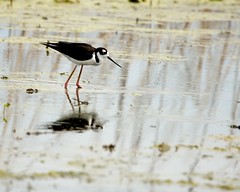
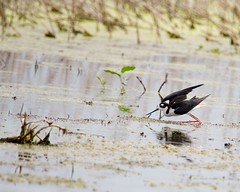
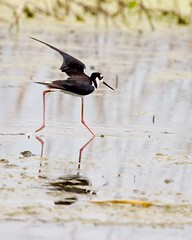
Black-necked Stilts at Emiquon

This summer of 2008 a dozen or more Black-necked Stilts have been inhabiting one of the canals left from the farming where Thompson Lake now resides. I was fortunate to catch a ride on a tour given by The Nature Conservancy after a day of volunteer work planting Cardinal Flowers in the wet prairie around Thompson Lake.


BlackNeckedStilt_MG_9186
BlackNeckedStilt_MG_9177
BlackNeckedStilt_MG_9188
BlackNeckedStiltEmq_MG_9181
Originally uploaded by jward199

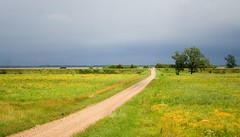
Emiquon Prairie Road


EmiquonPrairieRoad_MG_9010
Originally uploaded by jward199

As the storm passed through the Emiquon valley, a golden light seeped in over the prairie.

Emiquon Valley Views


EmiquonValleyView_MG_9004
Originally uploaded by jward199

Looking towards Canton from the Prairie Road, just after a great thunder and lightning storm passed over Emiquon.

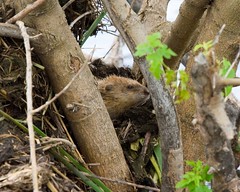
Muskrat at Emiquon, Thompson Lake


Muskrat at Emiquon, Thompson Lake
Originally uploaded by jward199

This muskrat had his/her eye on me as we passed the den in our pontoon boat.

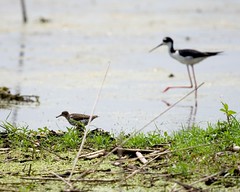
Spotted Sandpiper with Black-necked Stilt at Emiquon


Spotted Sandpiper with Black-necked Stilt at Emiquon
Originally uploaded by jward199

A Spotted Sandpiper was peeping around with the Black-necked Stilts at Thompson Lake, Emiquon Preserve, on July 11, 2008.

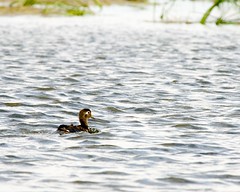
Wood Duckling Emiquon


WoodDucklingEmq_MG_9373
Originally uploaded by jward199

This little Wood Duck was kind of late in responding to the take-off call from the mama. But his eyes show his intention to flee, which he presently did!

Friday, July 04, 2008

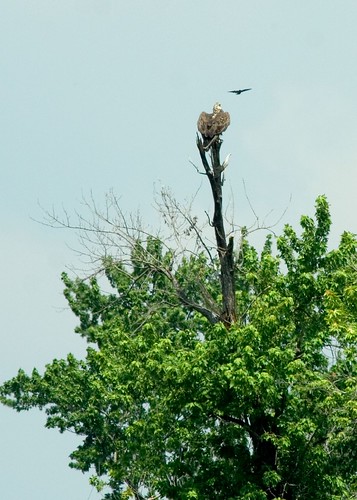
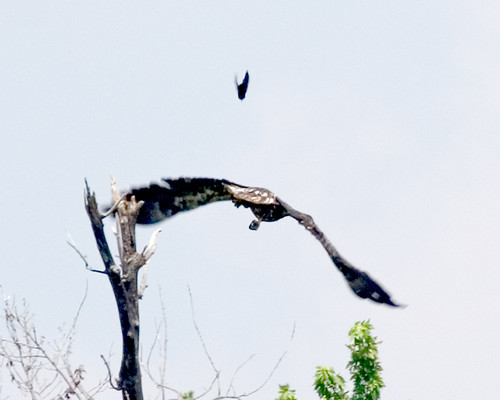
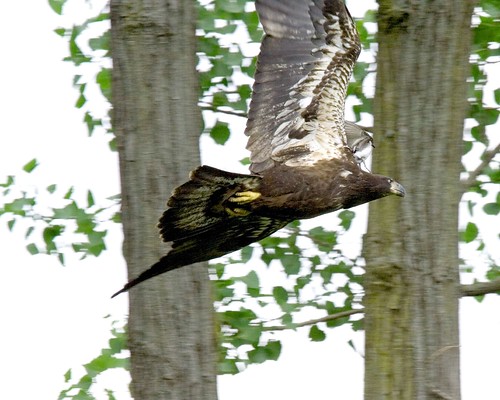
Another Juvenile Eagle Being Harassed by Little Birds

This young (third year?) eagle was on a tall snag at Woodford State Fish & Wildlife Area. Red-winged blackbirds hounded him until he flew away. As he flew past, it looked like the eaglet was holding something small in his foot, possibly a baby bird?


EagleWoodfordSFWA_MG_8491
EagleWoodfordSFWA_MG_8493
EagleWoodfordSFWA_MG_8491
Originally uploaded by jward199

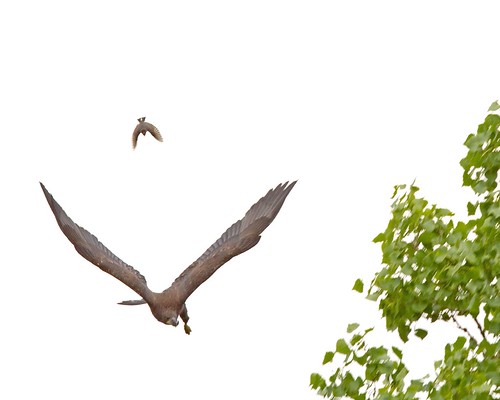
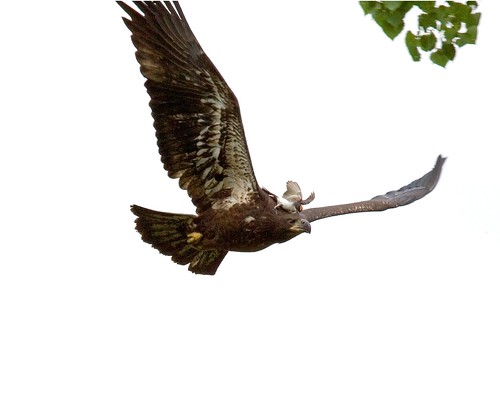
Eaglet Chased by Kingbird!

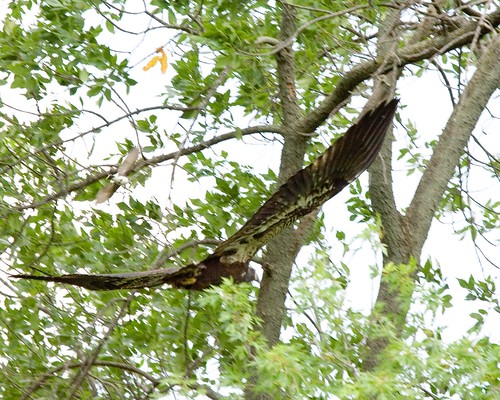
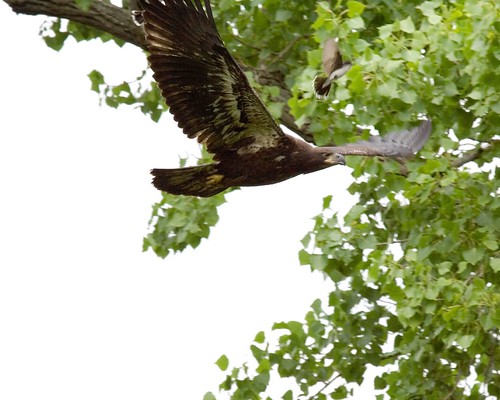
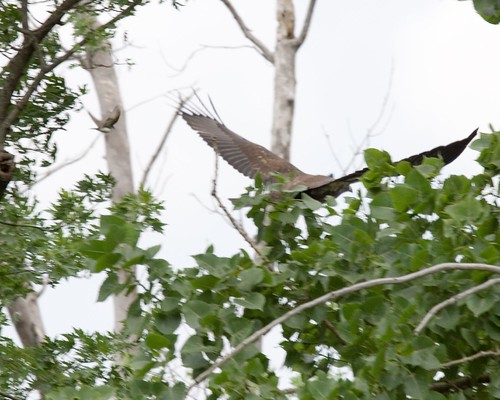
My friend Ed and I visited the Eagle nest on Friday, July 4, hoping the eaglets would still be returning to the nest to feed. Fellow eaglet watchers assured us that the adults continue to bring food and drop it off on both the current and old nests. As we waited behind the blind across the highway from the nest site, one of the eaglets flew in toward the nest with a Kingbird right on him. It looked like he had something in his foot, perhaps a baby Kingbird? But no, it wasn't anything at all. The poor eaglet was trying to come back to his nest and the Kingbird was protecting his nest area, and both nests happened to be near each other, unfortunately for our eaglets!


Copy of EagletKingbird_MG_8370
EagletKingbird_MG_8375

Two Kingbirds are on this baby eagle, one on his head and the other at the tip of his wing, you can just see the tail.


EagletKingbird_MG_8372

The Kingbird hangs on and rides on the back of the eaglets neck!


EagletKingbird_MG_8374

Our baby eaglet finally loses the tenacious Kingbird.


EagletKingbird_MG_8372

Once more the Kingbird lands on his back.


EagletKingbird_MG_8371

Our young eaglet finally gets away!


EagletKingbird_MG_8377

Sunday, June 29, 2008

Environmentalists and Banner Residents Oppose Mine Site for Good Reasons

I've been reading comments to some articles in the Peoria Journal Star regarding the proposed mining site near Banner, Illinois. Several comments to the stories indicate that some readers think it is fine to mine an area and reclaim it later, pointing to Banner Marsh as an example. I would like to point out that there were many, many years when the property that is now Banner Marsh was totally unsuitable for people or wildlife to inhabit.


Originally, the property that is now Banner Marsh consisted of several bottom-land lakes connected by channels to the Illinois River. Interspersed between the lakes, known then as Kelsey, Slim, Murry, Long and Scotts, were low ridges of land covered by a heavy growth of bottomland timber.

In 1910, a drainage district was organized. The Banner Marsh area of the river's floodplain was drained and leveed, enclosing about 4,500 acres. The levee broke in 1926 and 1943. It was raised and broadened after the big flood of 1943, and the river has remained on the outside since.

Sometime after that, the farmland became a strip mine, destroying any possibility of returning the land to its former configuration as a series of lake connected to the river. The strip mine operated for about 30 years. Then in 1973, the Illinois Department of Conservation purchased the first parcel of the 6,500-acre area, and 20 years later the Army Corps of Engineers spent 15 million dollars to reclaim it, starting in about 1992. It took about 10 years to do so. During all that time, from 1943 through the rest of the century, the land was in wretched condition.

The proposed mining permit area is about 600 acres, of which 400 acres are to be mined. Some of this land is farm land, some farmed wetland that floods almost
every year, some is wetland scrub/shrub, and some is wetland forest. This area is currently providing habitat for wildlife, even as it is farmed, habitat that will be destroyed during mining operations if it is allowed.


Mining is planned to take place for 5 to 10 years, depending on what company official statements you read. (The permit is for 5 years, but once a permit is granted, it is usually renewed without serious examination for another five years.) Reclamation will take at least 5 years. So we are looking at 10 to 15 years before it begins to revive to a state similar to Banner Marsh. This lengthy period of time will disrupt many sensitive species who depend on the habitat along the Illinois River corridor to survive.

* There is an American Bald eagle roost within two
tenths of a mile of the mine site, and Eagle Nests in the Rice Lake area adjacent to the site.

* There are three known osprey nests in the entire state of Illinois, one of which is in the west side of Banner, and one of which is near the proposed mining site at Rice Lake.

* Short-eared owls winter in the area, roosting in the Rice Lake area and possibly in the permit area and hunting the wide-open wetland of the the adjacent(from an owl's point of view) Banner Marsh on late winter afternoons and evenings.


The mine discharge water will be routed to Rice lake, and will contain toxic heavy metals. These tend to concentrate up the food chain, so that fish, and birds which prey on the fish will probably be at significant risk for heavy metal poisoning, as will people who consume the fish. These metals include lead, cadmium, selenium, and arsenic. Fishing and hunting at Rice Lake could be discontinued for health reasons if the mine does operate and high levels of these metals are found in the fish.
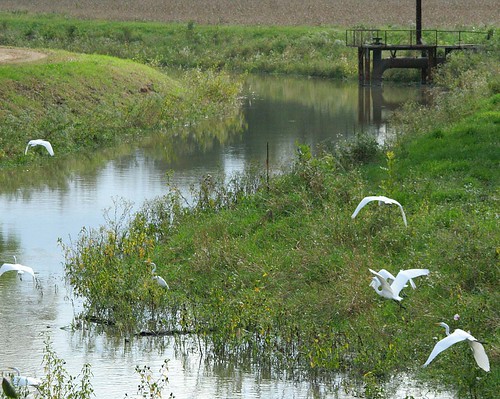
Great Egrets Copperas Landing IMG_8089

There is some indication that there may be more economic benefit to the region if we promote ecotourism. There is a wonderful group of wildlife refuges between Banner and Havana, including the Nature Conservancy's Illinois River Project at Emiquon. Dixon Mound is starting to supervise new archaeological digs in the area. The Federal Fish and Game people, the Nature Conservancy and the State fish and wildlife conservation officers are working together to provide coordinated use plans and interpretive areas for many of the protected wildlife areas (like Chautauqua and Emiquon Wildlife Preserve). People from Chicago drive down to the area frequently to view the wildlife that is thriving along the river.

Of course, the real goal of the mining company may be to get a small permit first, degrade the wildlife areas substantially and do preliminary water control on the site at this mine, and then convince the state to sell the mining rights to Rice lake itself. If that happens, we will have a huge, ugly strip mine providing jobs and polluting the Illinois River for the next thirty years.

Remember, the DNR experts who have granted this permit are largely from the Office of Mines. The Illinois Natural History Survey biologists are now associated with the University of Illinois, and other Conservation Officers have been shifted out of the Department of Natural Resources.

The major input to the decision was from the mining perspective. The Conservation Officers at Rice Lake were very much against the proposal initially (several years ago), but there has been a deafening silence since. One assumes they have been at some risk for their jobs. Some of the data offered by the petitioners against the mine came from the former supervisor of Rice Lake.

The people who live in the village of Banner will have this mine on their doorstep, in some cases within fifty yards of their back door. Their property values will plummet. They all oppose the mine. About 70 wells in the area may be at risk.

This mining permit was granted by the DNR in error, and needs to be revoked.
Sunday, June 15, 2008

June at Emiquon and Henry Allen Gleason Preserves

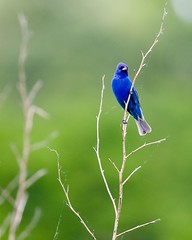
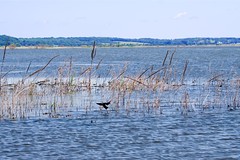
Last week my friend and I drove down to Emiquon. Thompson Lake covers a huge expanse of the floodplain on the east side of IL 78. We did not find many waders or other waterfowl though. One egret flew over and later one heron flew over, but none were in the water as we had expected. A few coots and a couple of mallards were in one of the canals, and a few killdeer were around. The main attractions at the lake were the dragonflies. Many different dragonflies, Green Darner, Saddlebags, Blue Damselfly, among others. The flowers in the prairie that was burned earlier this spring are fantastic. Yellow Lance-leaf Tickweed mixed with the deep purple/blue of the Spiderwort interspersed among the bright green of the other plants were a delight to our senses. A gorgeous Indigo Bunting sang from a stalk not far from Prairie Road, giving me a chance to photograph him without leaving the car.
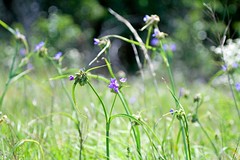
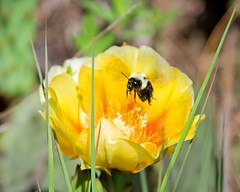
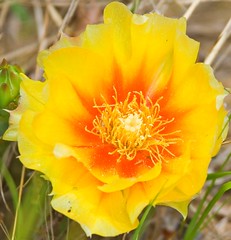
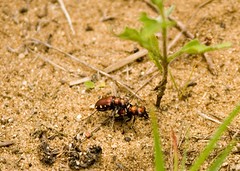
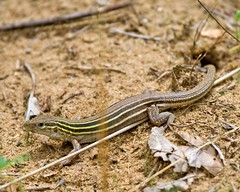
We stopped by Henry Allen Gleason Preserve on our way back. This sand prairie is beautiful. Spiderwort and Prickly Pear Cacti cover the sand dunes. We ran across a couple of Six-lined Racerunners and Big Sand Beetles. Indigo Buntings were singing along the edge where the Blackjack Oaks meet the sand prairie. We did not find any Regal Frittilary butterflies, but we did find a beautiful Black Swallowtail and some Bumble Bees busy pollinating the Prickly Pear blossoms. I would have stayed to search for birds, but the black flies were biting me on my face. Bug spray deterred them not one bit. I have a bite under my right eye that has given me a black eye. We came out with about 25 deer ticks too, some of which we did not find until we got home. Mosquitoes were there but not nearly as bothersome as the flies and the ticks.

On Saturday I went back (inspite of the bugs!) with my daughter, thinking that the majority of the Prickly Pears would be in bloom. That event is yet to come. Probably this week, but I, alas, am nursing my eye and won't be able to see them. Bugs once more chased us away before we had explored much. However, on our drive along the Manito blacktop heading towards the Gleason Preserve, Mary and I spotted a Northern Harrier flying low over one of the restored grassy areas. He was being chased doggedly by a Red-winged Blackbird.


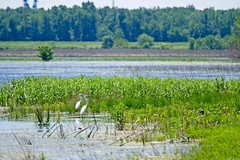
Great Egrets at Thompson Lake

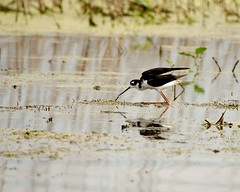
The past several times I've visited the lake, I've not seen any egrets or herons, except an occasional flyover. On Saturday there were five in different spots foraging in the wet grass.


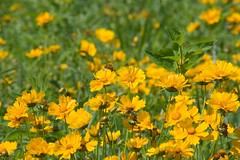
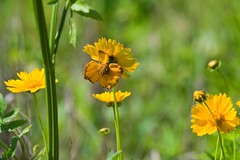
Lanceleaf tickseed at the Emiquon Prairie

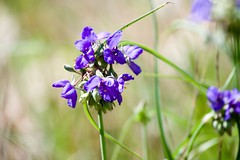
The prairie at Emiquon is carpeted with Spiderwort and Lanceleaf tickseed.


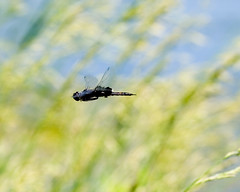
Dragonflies at Emiquon

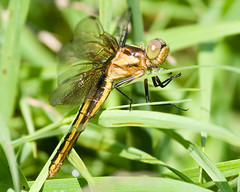
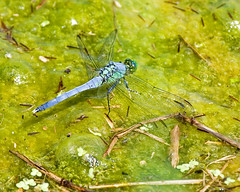
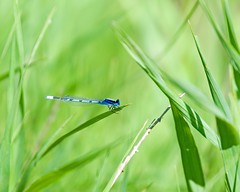
Many dragonflies hovered over and around Thompson Lake: Black Saddlebags, Halloween Pennant, Eastern Pondhawk, and a blue Damselfly, among others.


Indigo Bunting by Prairie Road at Emiquon


IndigoBuntingEmq_MG_6799
Originally uploaded by jward199

Bumble Bee in the Prickly Pear Blossom

Prickly Pear Cacti are everywhere you look as you climb the sand dune at Robert Allen Gleason Preserve.


PPBlossomGleason_MG_6595

Big Sand Beetles at Gleason

Six-lined Racerunner at Gleason


Six-linedRacerunnerGleason_
Originally uploaded by jward199

Fragrant Sumac Berries at Gleason


FragrantSumacBerriesGleason_MG_6644
Originally uploaded by jward199


SpiderwortGleason_MG_6745
Originally uploaded by jward199

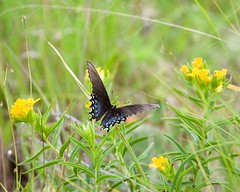
Black Swallowtail at Gleason


BlackSwallowtailButterflyGl
Originally uploaded by jward199

Spiderwort at Henry Allen Gleason Preserve


SpiderwortGleason_MG_6722
Originally uploaded by jward199


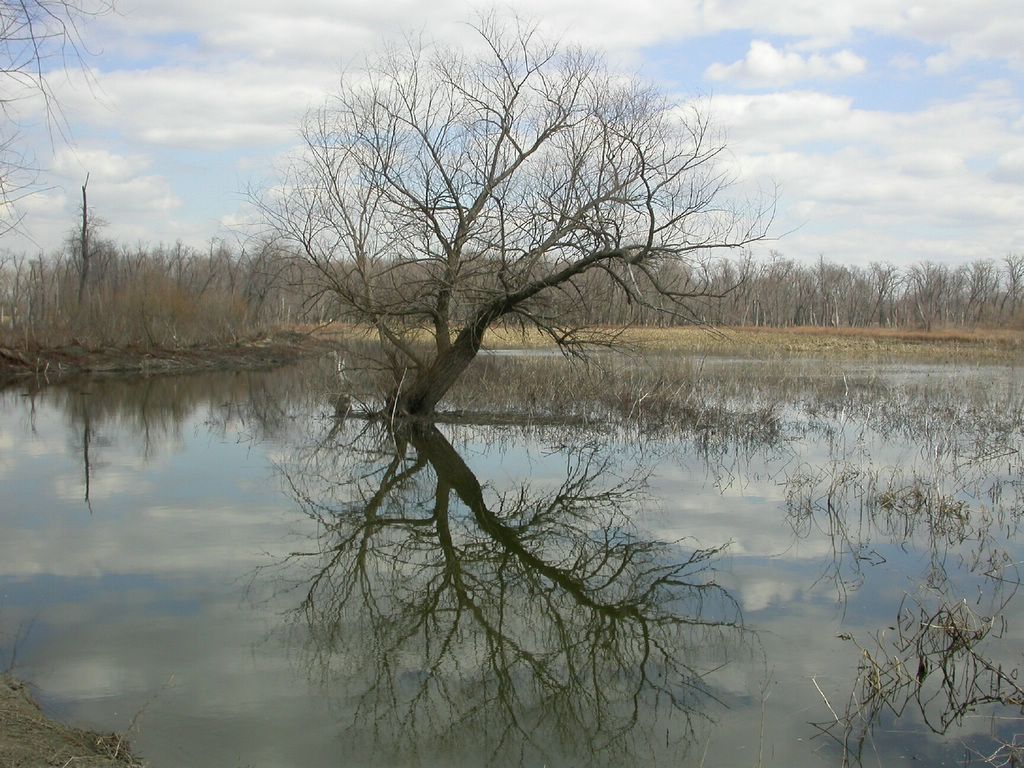
ThompsonLakeEmq_MG_6032
Originally uploaded by jward199

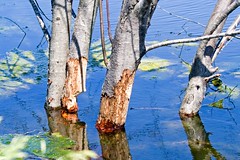
Beaver Damage at Thompson Lake


BeaverDamageThompsonLake_MG
Originally uploaded by jward199

Evidence that beavers are in the area!

Friday, May 30, 2008

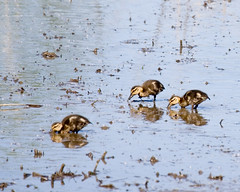
Baby Mallard Ducklings

Feeding in the marsh at Cooper Park.


BabyMallardsCooper_MG_4857
Originally uploaded by jward199

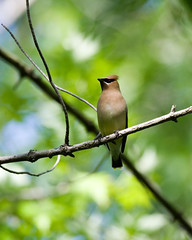
Cedar Waxwing

Dozens of Cedar Waxwings filled the woods along the trail at Cooper Park.


CedarWaxwingCooper_MG_4977
Originally uploaded by jward199

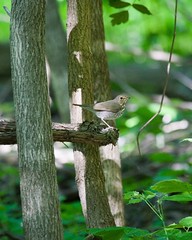
Swainson's Thrush

A Thrush was foraging in the bottom land near the marsh at Cooper Park. I thought it was a Hermit Thrush, but he is actually a Swainson's Thrush. (Thanks, Mathew!)


HermitThrushCooper_MG_4908
Originally uploaded by jward199