Wednesday, August 27, 2008

Rice Lake--Peeps on the Floodle and Bees on the Berm

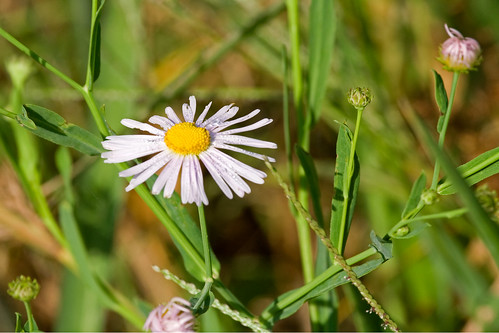
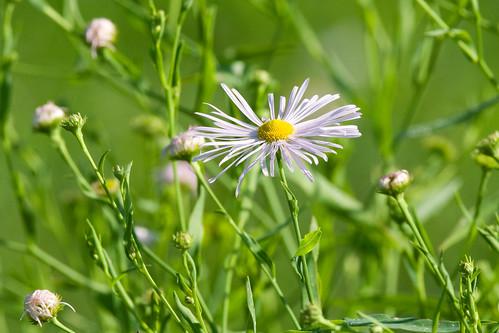
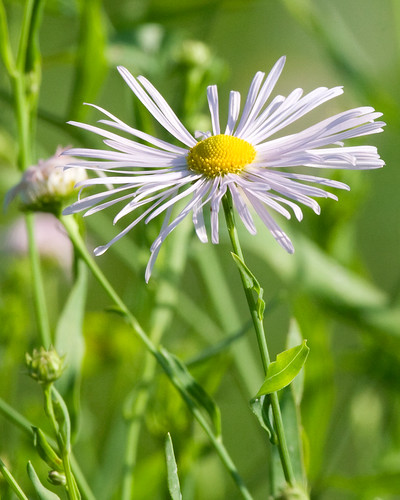
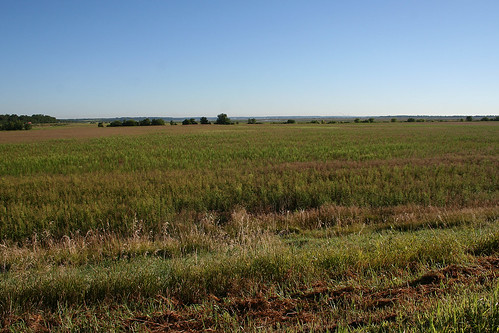
I went back down to Rice Lake on Tuesday morning, going in from the Banner Dike Road, and walking the same levee as before. This time Scott went with me, and we walked the full circle, a 2 mile walk. He was amazed at the Decurrent False Asters growing in the field surrounded by the levee. There is a huge amount of it growing there, filling a third of the field; all the high areas of the field are covered with a mixture of asters and millet (and pigweed).


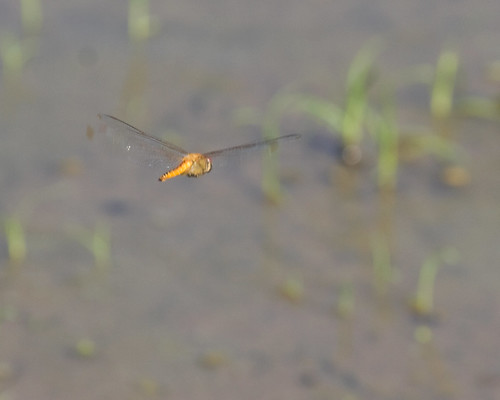
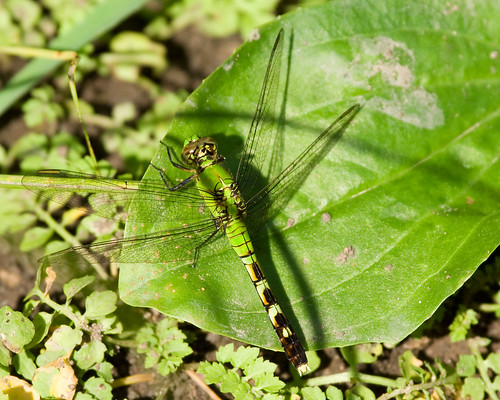
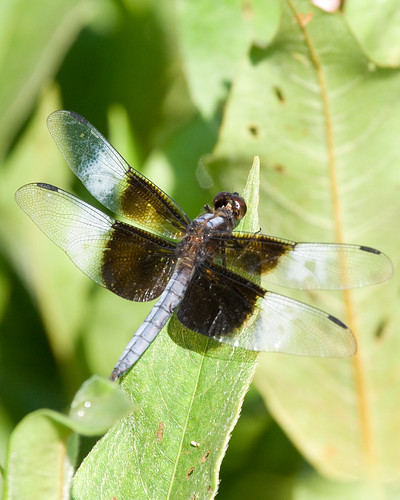
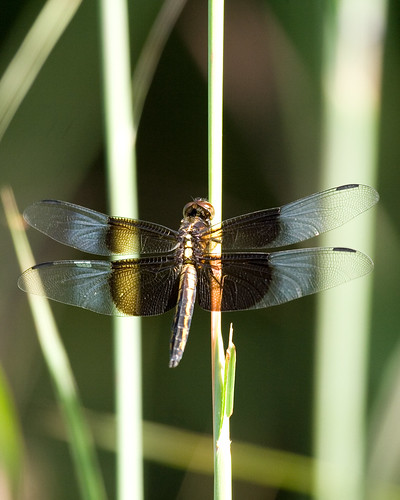
We found many dragonflies on our walk: Twelve-spotted Skimmers (male and female), Widow Skimmers (dozens of males and females), Eastern Pondhawks (male and female), Ruby Meadowhawks (I think, female), Common Whitetails (male and female; one male was eating a tiny damselfly), and an Eastern Amberwing. Many damselflies we could not identify. Here are a few photos:
Damselfly
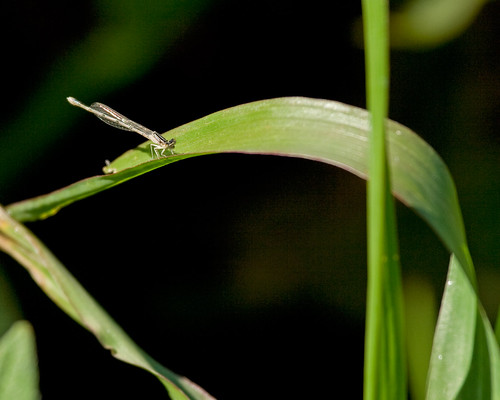
Common Whitetail, juvenile
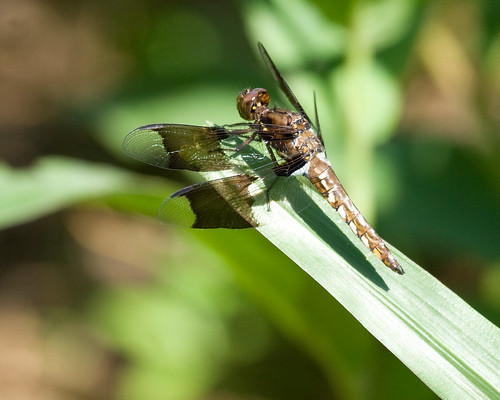
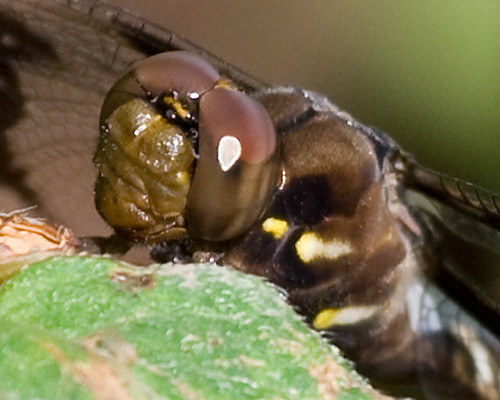
Eastern Pondhawk, male
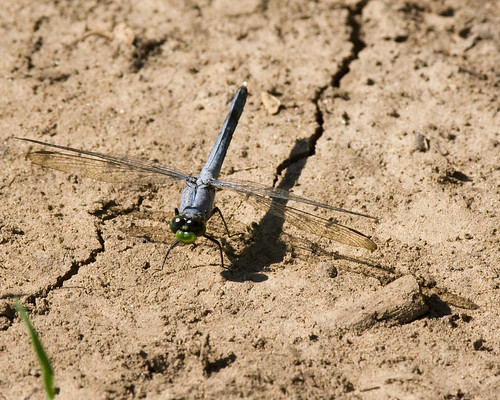
Possible Ruby Meadowhawk:

Twelve-spotted Skimmer, male:


Some butterflies were flying about: quite a few Monarchs, one Viceroy, a Buckeye, Cabbage Whites, and many tiny butterflies and/or skippers I could not identify.
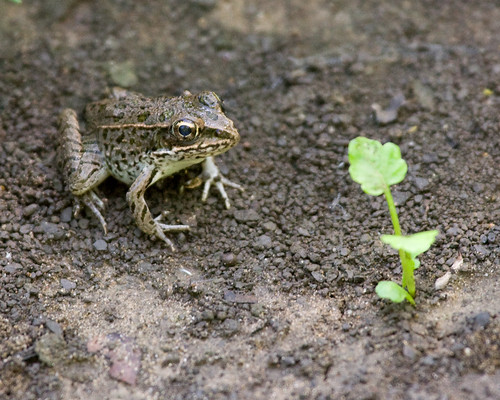
Many small Leopard Frogs were scurrying around to get out of our way, as were hundreds of grasshoppers.

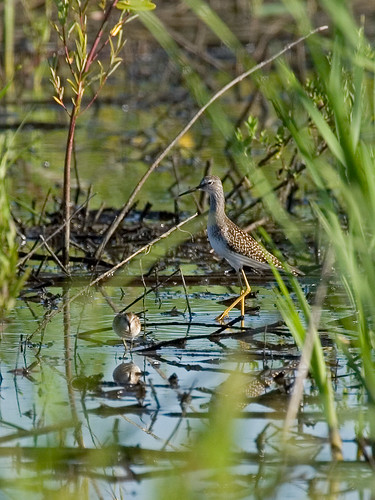
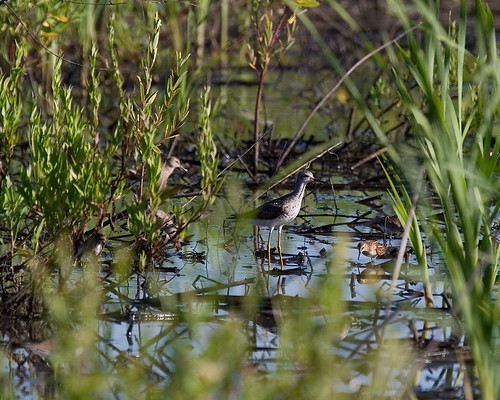
The highlight of the walk were the many peeps in the large pool of water (floodle) remaining from the summer floods at the far western corner of the field. The ones we could identify:

Greater Yellowlegs (I think, could be Lesser) -- 4
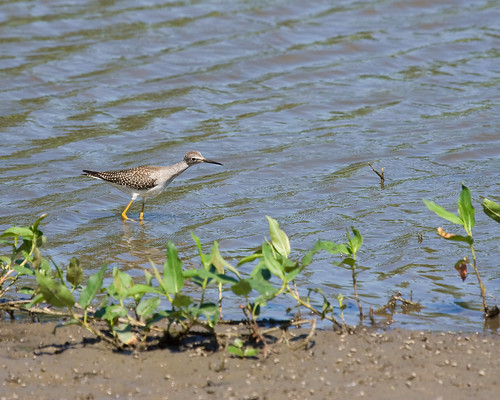
Greater Yellowlegs and Solitary Sandpiper

Solitary Sandpipers -- 2
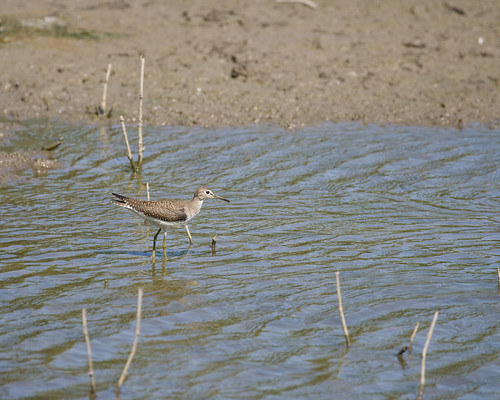
Semipalmated Sandpipers -- 5
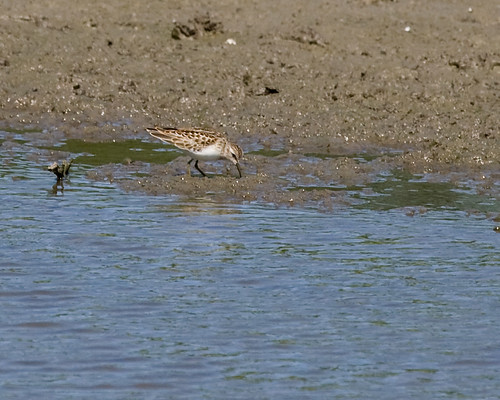

Killdeer -- 12
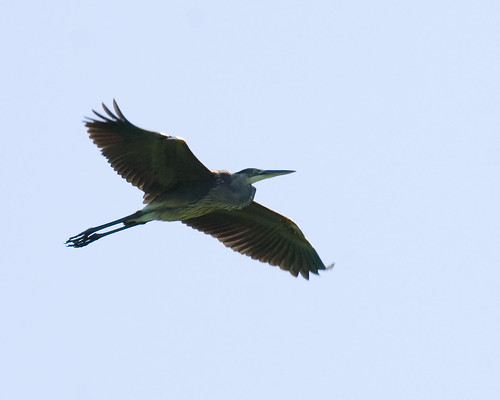
Great Blue Heron -- one in the floodle, flew away. Two in the marsh at the north end of Rice Lake, one flew over.

Pileated Woodpecker -- 2 flying over

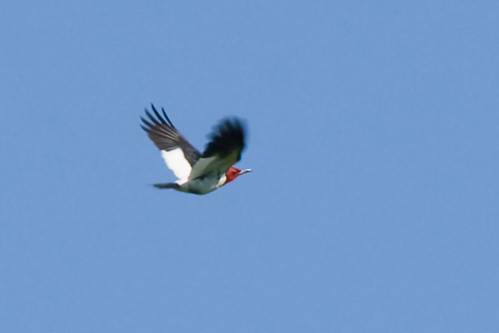
Red-headed Woodpecker -- 1 flying over

Geese -- 23 flew over
Blue Winged Teal -- one flew over
White-tailed Deer -- one with large rack

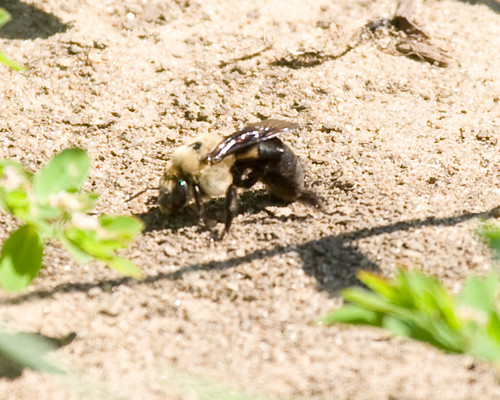
On the last leg of the walk, the longest one, along the levee running on the north side of the irregularly shaped field, Scott and I began hearing a buzz. It grew increasingly loud. We began seeing Bumble Bees flying low along the top of the levee, about a foot off the ground, or on the ground, or coming in or out of the many holes in the bare dirt on top of the levee. This part of the levee has not been driven lately; trees have fallen across the berm in several areas. We kept walking, climbing over trees when necessary, as our only choices were going back the long way, crossing the field of asters, or trudging through the swamp on the other side of the berm. The number of bees grew larger and larger. I have never seen any thing like this. They did not pay much attention to us, but I was paying attention to them, trying not to step on any!
Monday, August 25, 2008

Rice Lake Conservation Area

I took a walk around the berm running around a former agriculture field that is now growing millet (planted by the DNR)and other marsh plants, including Decurrent False Asters, one of the state endangered species.

Here is a look back towards the check station as I walked along the berm:

-- from jward199 -

Decurrent false aster, sometimes know as false starwort, is a big river floodplain species. Populations of decurrent false aster have declined as wetlands have been drained and converted to agricultural crop production. Decurrent false aster is listed ENDANGERED by the state of Illinois and THREATENED by the U.S. Fish and Wildlife Service. Decurrent false aster grows in wetlands, on the borders of marshes and lakes, and on the margins of bottomland oxbows and sloughs. Historically, this plant was found in wet prairies, marshes, and along the shores of some rivers and lakes. Decurrent false aster favors recently disturbed areas and flooding may play a role in maintaining its habitat. Current habitats include riverbanks, old fields, roadsides, mudflats and lake shores. Decurrent false aster prefers a moist habitat but can tolerate drought.

I found a good amount of it growing in the field behind the trees along Banner Dike Road. This field is surrounded by a berm; it had beeen flooded until early summer this year, which may have helped the asters. Here are some photos of the lovely Decurrent False Asters:


-- from jward199 - (?)

This area is just south of the area that Capital Resources is trying to mine. Here is an aerial map showing the area. You can see Banner Marsh, a reclaimed coal mine (and it sure looks it!) as well as Rice Lake. The red marks the outline of the proposed mining site. I was walking around the berm just below the proposed site, the irregularly shaped light-green area surrounded by a deteriorating levee. If the Decurrent False Asters are growing here after the flood, you can be sure they are growing in the permit area that was flooded during the spring and early summer.

Dragonflies and a Butterfly

I think this is a Gatekeeper butterfly, but it wouldn't open its wings for me.


This might be a female Ruby Meadowhawk. It was hovering over a standing pool of water along side the berm, occassionally chasing another similarly colored dragonfly away.


A large number of Eastern Pondhawks were flying around the berm.


And quite a few Widow Skimmers.

Indigo Bunting, Great Blue Heron, and Coyote

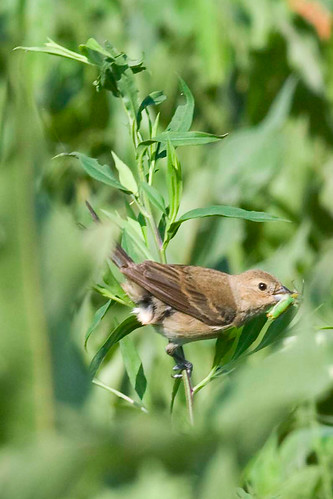
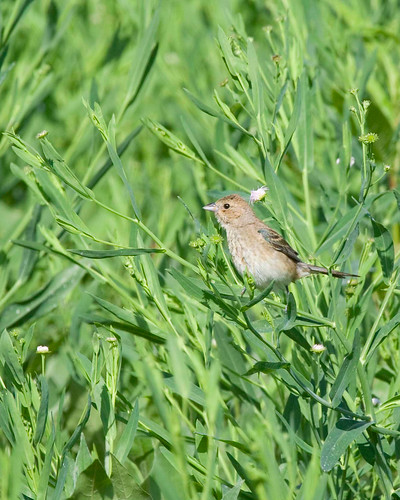
This female Indigo Bunting was hunting bugs (a katydid?) and doing her best to keep my attention. She must have had a nest near by. I thought I had some rare grassland sparrow until I got a closer look. I don't see the females very often, as the more striking males get my attention. Well this little bird made up for it, give me lots of time to watch her as she stayed just a short distance in front of me as I walked along the berm.


A Great Blue Heron flew over:


A coyote was sauntering across the field off in the distance when something got his attention:

Saturday, August 23, 2008

A morning at Forest Park

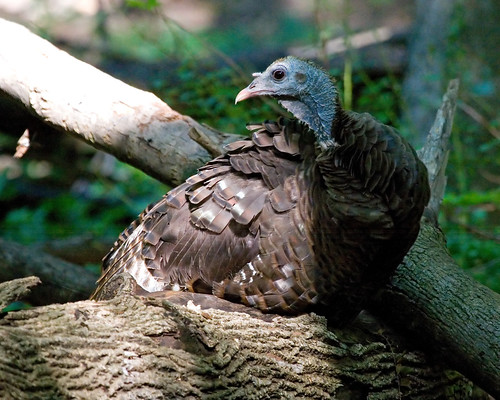
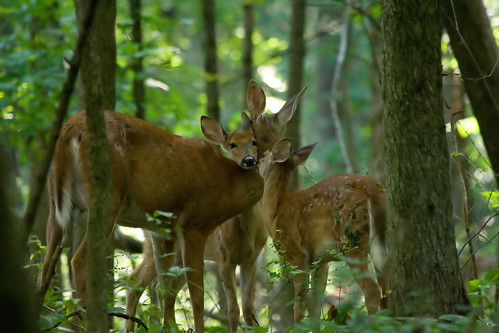
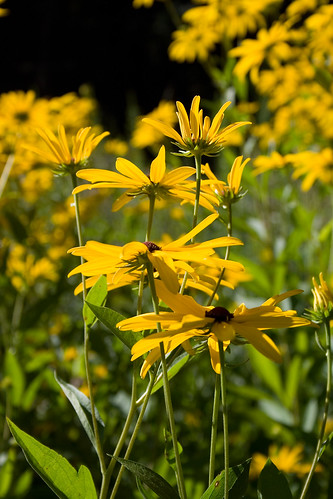
Scott and I went for a walk at Forest Park Nature Center last week. When we walked past the nature center, a turkey was on the feeder. I didn't have my camera set up yet and missed that shot. But I took several of the bird as it wandered up the bluff behind the nature center. Then a doe with three fawns, a band of about 20 turkey toms, and some dragonflies and butterflies and beautiful prairie flowers made it a lovely morning!
YoungTurkeyFP08172008_MG_1482_filtered
DoeWithTwoFawnsFP_MG_1610-s_filtered
BlackeyedSusansFP_MG_1646-s


WidowSkimmer8-17-08_MG_1828

Sunday, August 17, 2008

Saturday, August 16, 2008

Dragonflies, Butterflies, & Skippers--IWIN Class at Lost Mound

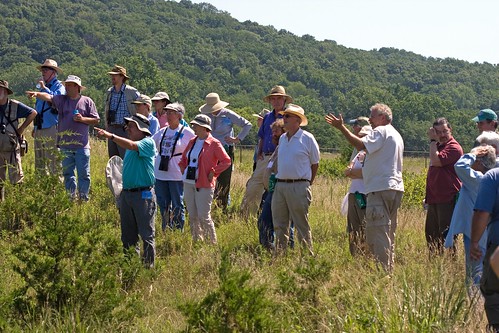
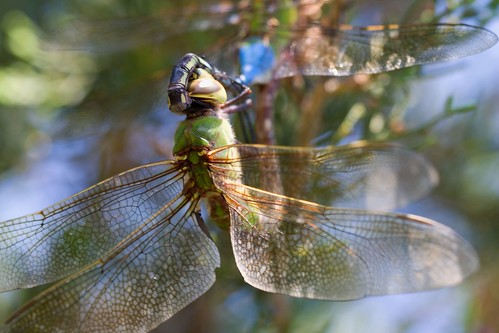
The last week in August was hot and humid in Illinois, and that is the week that the Illinois Natural History Survey (INHS) held their summer Illinois Wilds Institute for Nature (IWIN) Workshop, Dragonflies, Butterflies, and Skippers, at the Lost Mound INHS field station. 40 or so adults from all over Illnois (and one couple from Iowa!) braved the steamy weather to learn more about these wonderful creatures.
IWIN-ClassLostMound-July2008-N0000302s

CommonGreenDarnerWheel-LM-N0000287s
Originally uploaded by jward199

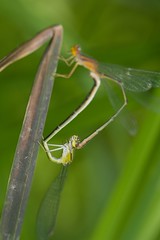
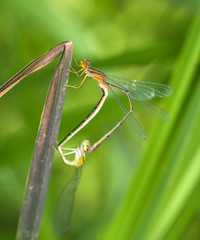
Damselfly Wheel at Mississippi Palisades

Golden colored damselflies mating in wheel position. I couldn't keep them both in the plane of focus. First one, then the other, then the male flew them to another blade, without losing their wheel position, however, it was out of my reach.


DamselflyWheelPalasidesN0000201(1)s


DamselflyWheelPalasidesN0000203(1)s
Originally uploaded by jward199

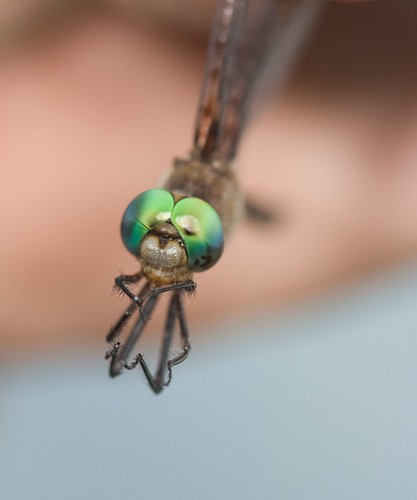
DragonflyEyesLostMoundN0000210(1)s

Is this a Blue Dasher? Those green eyes! I have no notes and no other photos. How beautiful, though unidentified.


DragonflyEyesLostMoundN0000210(1)s

Originally uploaded by jward199

GreenDarnerWheelLostMoundN0000279s

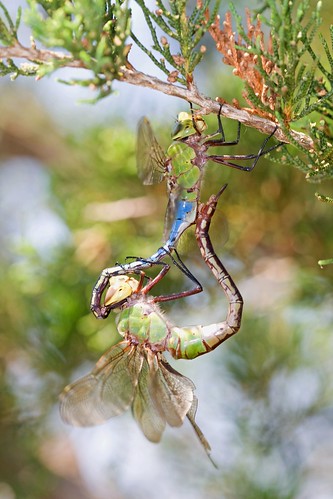
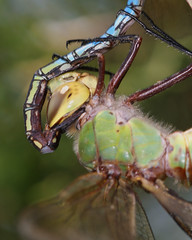
Here is a pair of Common Green Darner dragonflies in wheel position, from the side.


CommonGreenDarnerWheel-LM-N0000287s

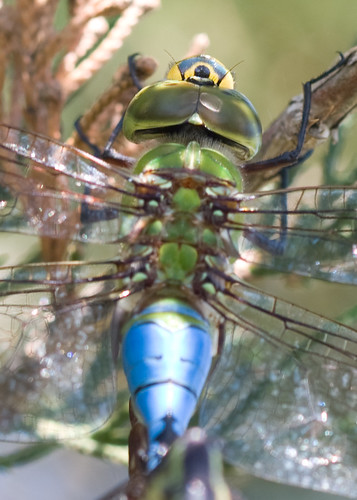
View from below of the mating green darners in the wheel position.


GreenDarnerWheel-LM-N0000266s

GreenDarnerWheelLostMoundN0000279s
Originally uploaded by jward199

Common Green Darner Wheel--Lost Mound

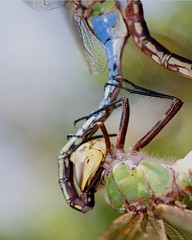
Close-up, cropped view of the male, then a cropped view of the male clasping the female's head during mating.


Common Green Darner Wheel--Lost Mound
GreenDarnerWheel-LM-N0000289s

Common Green Darner Wheel--Lost Mound
Originally uploaded by jward199

TreeFrogV0000043


TreeFrogV0000043
Originally uploaded by jward199

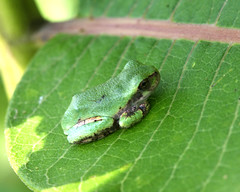
A tiny green tree frog hiding in the cool shade of the milkweed plant.

Lily Pads at Mississippi Palisades

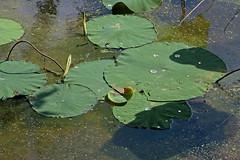
Lily pads, each their own little world, floating on the shallow backwaters of the Mississippi.


LilypPadsPalasidesN0000186(1)
LilyPadsPalasidesN0000189
Originally uploaded by jward199

Tuesday, July 22, 2008

Stop the Mine at Banner


Click here to sign the petition.

The Illinois Department of Natural Resources has issued Capital Resources Development Company permit to operate a surface coal mine on 643.2 acres (Proposed Permit Area) of property south of and adjacent to the Village of Banner.

We believe that the IDNR issued this permit without due consideration of its ecological impact and that, if the mining proceeds as proposed, it will be in violation of Bald and Golden Eagle Protection Act and the Migratory Bird Treaty Act.

We are sending this petition to the U.S. Fish & Wildlife Service to ask them to investigate and stop this mining activity before it destroys sensitive habitat between Banner Marsh State Fish & Wildlife Area and Rice Lake Conservation Area, and area, where Bald Eagles roost in the winter and nest in the spring and summer, where migratory birds, including thousands of Geese, Ducks, Coots, Cormorants, and Pelicans, stop over each spring and fall.

The proposed mining plans include blasting the coal from the ground during the winter months, when eagles would be roosting nearby. The blasting will surely disturb them. Eagles begin their nesting activities in the winter. The blasting at the proposed mining site would surely disturb nesting eagles.

Please help us stop the destruction of Eagle Nesting and Roosting habitat. Sign this petition and then, for even greater impact, send a letter directly to the regional USFWS office:

Field Supervisor: Richard Nelson
e-mail: RockIsland@fws.gov or MidwestNews@fws.gov
1511 47th Avenue
Moline, IL 61265
Phone: 309-757-5800
Fax: 309-757-5807
TTY: 1-800-877-8339

Send the letter certified for even greater impact. Thank you for helping to call attention to this important issue.

Click here to sign the petition.

Sunday, July 13, 2008

Great Blue Heron at Bells Landing


GreatBlueHeronBells_MG_9659
Originally uploaded by jward199

A Great Blue Heron stood still as I drove past the small pond on the way to the boat ramp at Bell's Landing.

Great Egret at Mendenhall Road


GreatEgretMendenhall_MG_999
Originally uploaded by jward199

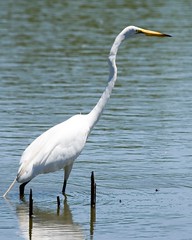
I stopped by Mendenhall road on my way back to Peoria. The water is down again and egrets and herons have returned.

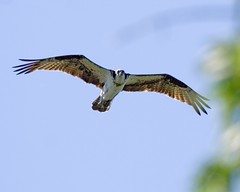
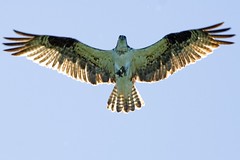
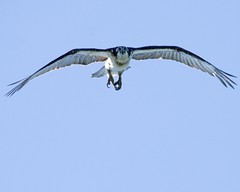
Osprey at Nest

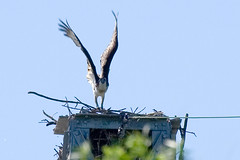
I walked along the dike at Banner Marsh to check on the osprey nest. One of the adults was sitting on the edge of the nest. He or she spotted me and flew out over me in a threatening way. I retreated behind the tree line. After a few minutes of photographing a Goldfinch, I went back for another look at the nest, trying to stay behind the trees. The bird spotted me and again flew out over me in a threatening way. I didn't want to disturb it any more than I already had, so I walked back to the car. I think there must be babies in the nest, although I didn't see them. I'm surprised that they haven't fledged by now. This nest is very large and deep enough to hide the young birds. From the adult's behavior I'd say the babies are still in there.


OspreyNestBells-cr_MG_9571
OspreyFlightBells_MG_9578
OspreyFlightBells_MG_9613

Saturday, July 12, 2008

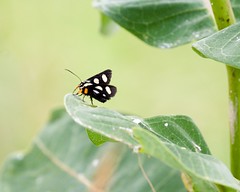
Eight-spotted Forester Moth at Emiquon

This butterfly turned out to be a moth. It was wandering around the milkweed along one of the old farm canals on the east side of Thompson Lake, near the now under water Pumphouse Road.
Alypia octomaculata; Owlet Moth Family Noctuidae; Forester Moth Subfamily Agaristinae
From eNature.com (Click title above to link to the article).
"Adults fly in bright daylight and are often mistaken for butterflies. The caterpillars spin thin cocoons of silk and litter or wood chips on the ground or in tunnels cut into wood. There is 1 generation a year."


8SpottedForesterEmq_MG_9268
Originally uploaded by jward199

BankSwallowsEmiquon_MG_9380


BankSwallowsEmiquon_MG_9380
Originally uploaded by jward199

Thousands of Bank Swallows were swarming over the waters of Thompson Lake, landing briefly in the few trees and shrubs that still exist along the farming canals in the center of Thompson Lake.